
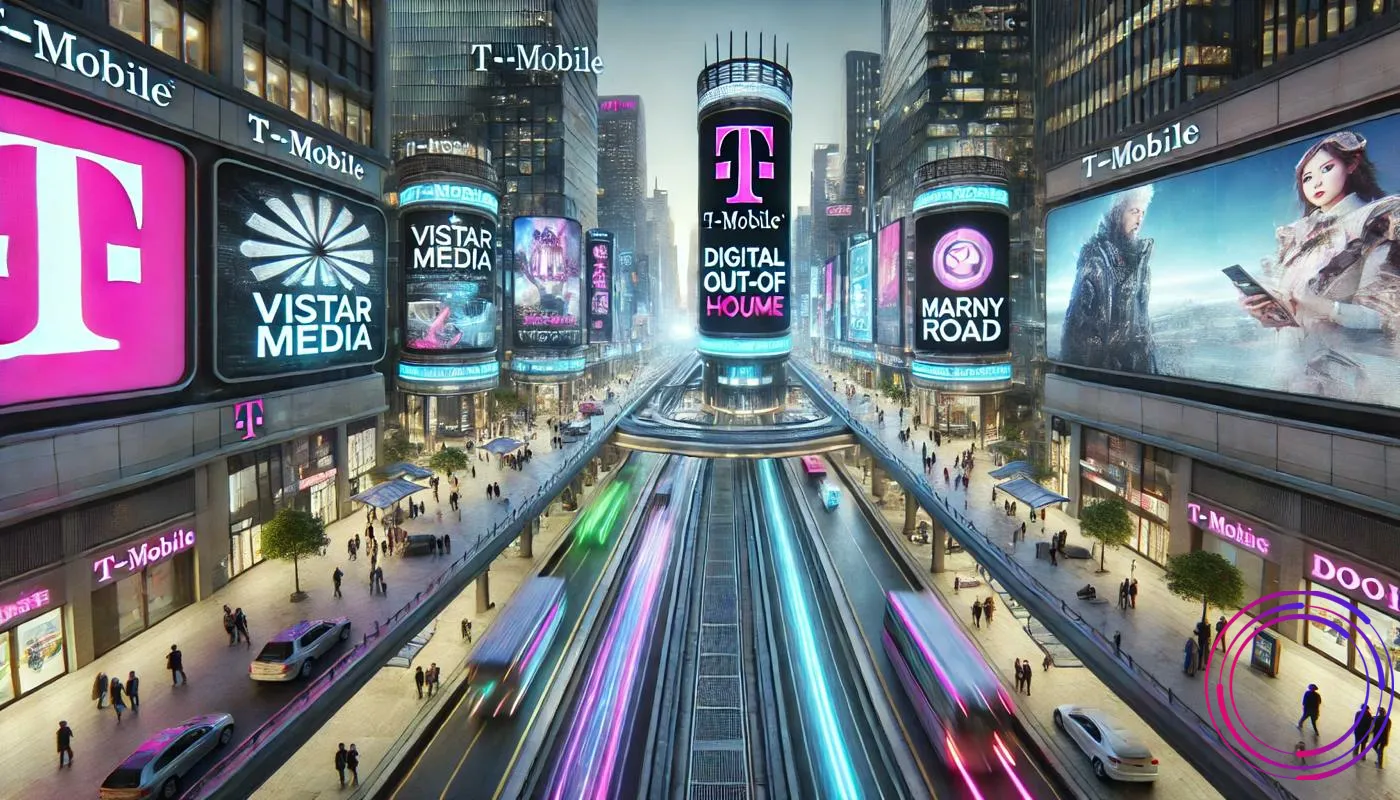
Unpacking T-Mobile’s Vistar Deal: Marny Road’s Take on Telecom and Ad Tech
Telecom giants have long chased the promise of ad tech, but their track record is littered with missteps. The allure is undeniable: telecom companies have access to rich first-party data, control the infrastructure that powers digital advertising, and possess deep pockets to fund ambitious acquisitions. Yet history shows the road from telecom to ad tech dominance is anything but smooth.
This week, T-Mobile took its own leap into the space by acquiring Vistar Media, a leading programmatic platform for digital out-of-home (DOOH) advertising. The move builds on its previous acquisition of Octopus Interactive, a network of interactive in-car screens for ride-sharing vehicles, signaling T-Mobile’s intent to be a major player in the physical advertising world. But can it avoid the pitfalls that tripped up its rivals?
A Rocky History: Telecoms and Ad Tech
Telecom companies have long been tempted by the ad tech gold rush, often with mixed or outright disappointing results.
Verizon led the charge in the mid-2010s with an aggressive series of acquisitions and investments. In addition to its high-profile purchases of AOL ($4.4 billion in 2015) and Yahoo ($4.5 billion in 2016), Verizon also made a strategic investment in Run DSP, a demand-side platform designed to help advertisers manage programmatic campaigns. While these moves established Verizon Media as a formidable player in digital advertising, the business struggled to compete against Google and Facebook’s scale and technological advantage. By 2021, Verizon Media was sold to Apollo Global Management, effectively marking the end of Verizon’s big ad tech ambitions.

Similarly, AT&T’s $1.6 billion purchase of AppNexus in 2018 aimed to bolster its Xandr ad tech division. But like Verizon, AT&T found the complexities of integrating ad tech with its core telecom operations insurmountable. By 2021, Xandr was sold to Microsoft, a sobering reminder of the challenges in turning telecom data into meaningful advertising revenue.
Why Vistar? Why Now?
T-Mobile’s acquisition of Vistar Media, however, reflects a more focused and potentially more viable strategy. Unlike Verizon and AT&T, whose acquisitions spanned digital and programmatic advertising broadly, T-Mobile is targeting the burgeoning DOOH market—a segment that sidesteps some of the pitfalls of traditional ad tech.
DOOH advertising, which involves placing ads on digital screens in public spaces, is growing rapidly. The market is projected to expand at a 13.2% compound annual growth rate (CAGR) through 2030, driven by advancements in programmatic technology, increased urbanization, and demand for privacy-safe advertising solutions.
Vistar Media specializes in automating the buying and placement of ads across a network of digital screens in transit hubs, retail spaces, and urban centers. Its programmatic platform doesn’t rely on cookies or invasive tracking, instead using location and contextual data to target audiences—areas where T-Mobile’s vast 5G network and first-party mobility data could provide a significant edge.
Building on the Octopus Acquisition
The Vistar deal also complements T-Mobile’s 2021 acquisition of Octopus Interactive, a network of interactive screens installed in rideshare vehicles like Uber and Lyft. Octopus gave T-Mobile an early foothold in DOOH, offering advertisers the ability to target passengers with hyper-local, dynamic ads based on real-time geolocation data.
Together, Octopus and Vistar could form the backbone of a powerful DOOH ecosystem, one that leverages T-Mobile’s strengths in connectivity and data to offer advertisers unique solutions. For example:
- Real-time bidding for DOOH ad placements powered by T-Mobile’s 5G capabilities.
- Enhanced targeting that combines Vistar’s programmatic tools with T-Mobile’s mobility and location data.
- Scalable cross-screen campaigns spanning rideshare vehicles, retail spaces, and urban centers.
A Delicate Balancing Act
While the opportunities are significant, T-Mobile will need to navigate challenges that have plagued other telecom-ad tech experiments.
- Integration Risks:
Telecom companies have a mixed record when it comes to integrating ad tech businesses into their operations. Vistar’s partnerships with media owners and advertisers are critical to its success, and any disruption could erode the platform’s value. T-Mobile must tread carefully to ensure that its telecom ambitions don’t alienate Vistar’s existing stakeholders.
- Focus and Agility:
A common pitfall for telecoms is underestimating the speed and complexity of the ad tech market. Unlike their traditional businesses, ad tech demands constant innovation and rapid adaptation to stay competitive. T-Mobile will need to maintain Vistar’s independence and agility while providing the resources necessary to scale.
- Execution and Differentiation:
For this acquisition to succeed, T-Mobile must do more than replicate what Vistar already does. The company needs to differentiate itself by leveraging its unique assets—5G, first-party data, and connectivity solutions—to offer something truly innovative. Without clear differentiation, T-Mobile risks becoming just another player in a crowded market.
A Provocative Gamble on DOOH
T-Mobile’s acquisition of Vistar Media represents a calculated gamble on the future of DOOH advertising. With its investments in Vistar and Octopus Interactive, the company is assembling a portfolio that could redefine how brands engage with audiences in physical spaces.
But the shadow of past telecom failures in ad tech looms large. The industry has seen too many promising acquisitions unravel due to poor integration, shifting strategies, or an inability to compete with digital ad giants like Google. For T-Mobile, the key will be execution—maintaining Vistar’s momentum while layering in its own unique capabilities.
Can T-Mobile rewrite the narrative of telecoms in ad tech, or will it simply be the latest chapter in a familiar story of overreach? The DOOH market is watching closely—and so should the rest of the industry.